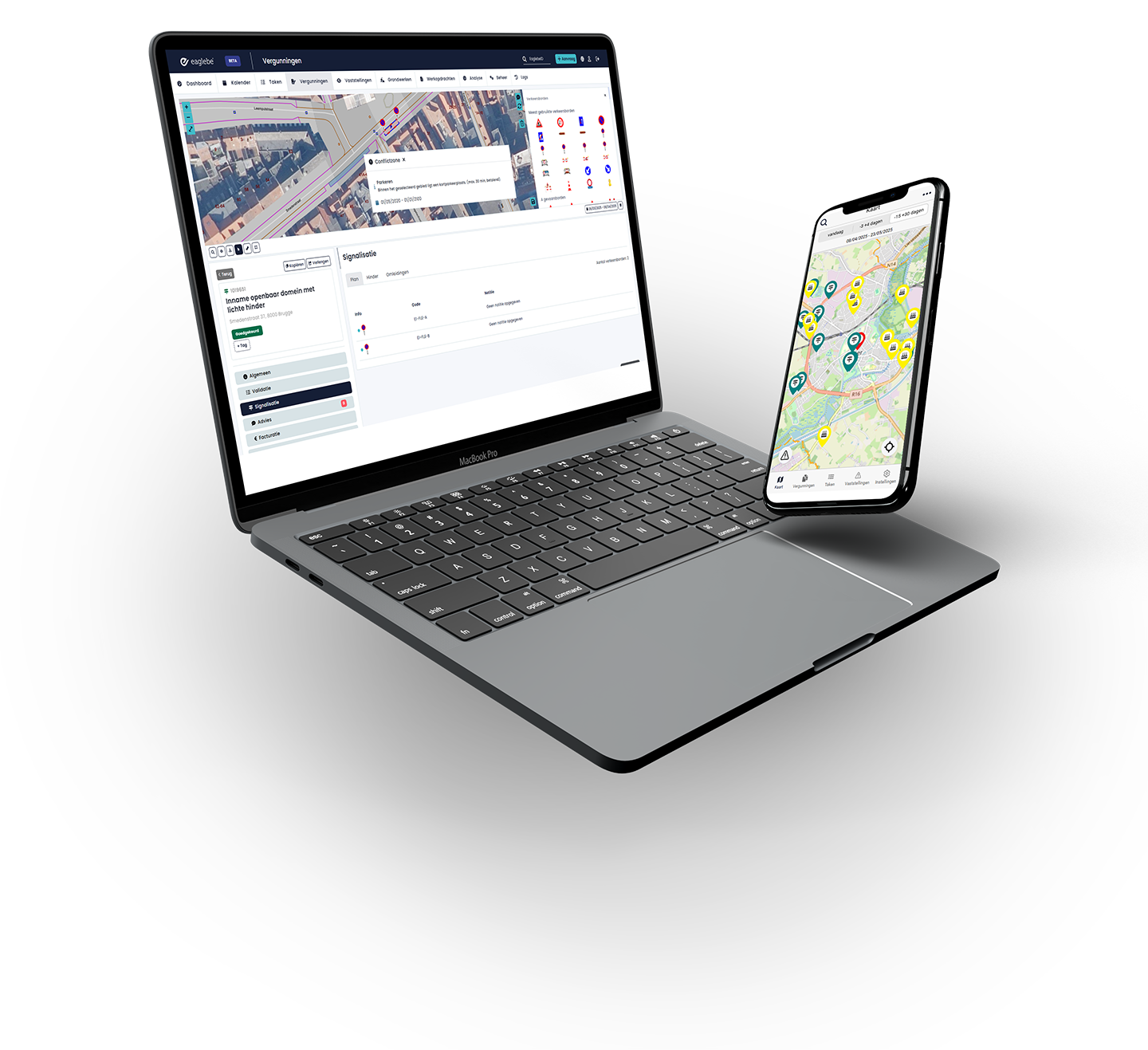
What is Eaglebe Spatial Orchestration?

Why the old way keeps failing
The old way fails because it manages physical work as text — so conflicts and safety risks only become visible in the field.

The textual blindspot
A written address can't show a physical footprint. Reviewers approve what they can't actually see.

The inbox &
spreadsheet trap
Disconnected threads and shared sheets can't compare space against time, so conflicting clearances slip through — and meet in the field.

The single-expert
bottleneck
The rules that keep work safe live in a few senior heads. When they're out, the pipeline stalls.

A conflict in physical space only exists if it happens in the same place at the same time. Everything Eaglebe Spatial Orchestration does follows from that one idea.


It sits next to the tools you already run.
Your EAM system tells you what you own. Your GIS tells you where it is. Your ERP handles the money. None of them governs the moment a third party wants to dig, build or gather on top of your assets.
That’s where Eaglebe Spatial Orchestration comes into the picture.

Why Eaglebe defines it
This isn’t a whiteboard concept. The engine behind Eaglebe Spatial Orchestration has cleared 50,000+ requests a month for a decade across 230+ public authorities, and it’s built as an Esri Gold Partner overlay. The category is new; the proof underneath it isn’t.

Book a Demo! And guard your physical domain — on one map
See how Eaglebe Spatial Orchestration turns your existing GIS into an active clearance engine, so you can coordinate works, manage risk, and prevent conflicts before anyone breaks ground.
Book your demo.